Hearts in the right place: Medline’s latest assist to get young learners pumped
By Medline Newsroom Staff | September 17, 2026
Hearts in the right place: Medline’s latest assist to get young learners pumped
Company puts its name and resources behind sheep’s-heart demos at Michigan Science Center, continuing its string of sponsorships with STEAM museums
InsidesOut-MAIN_DISPLAY
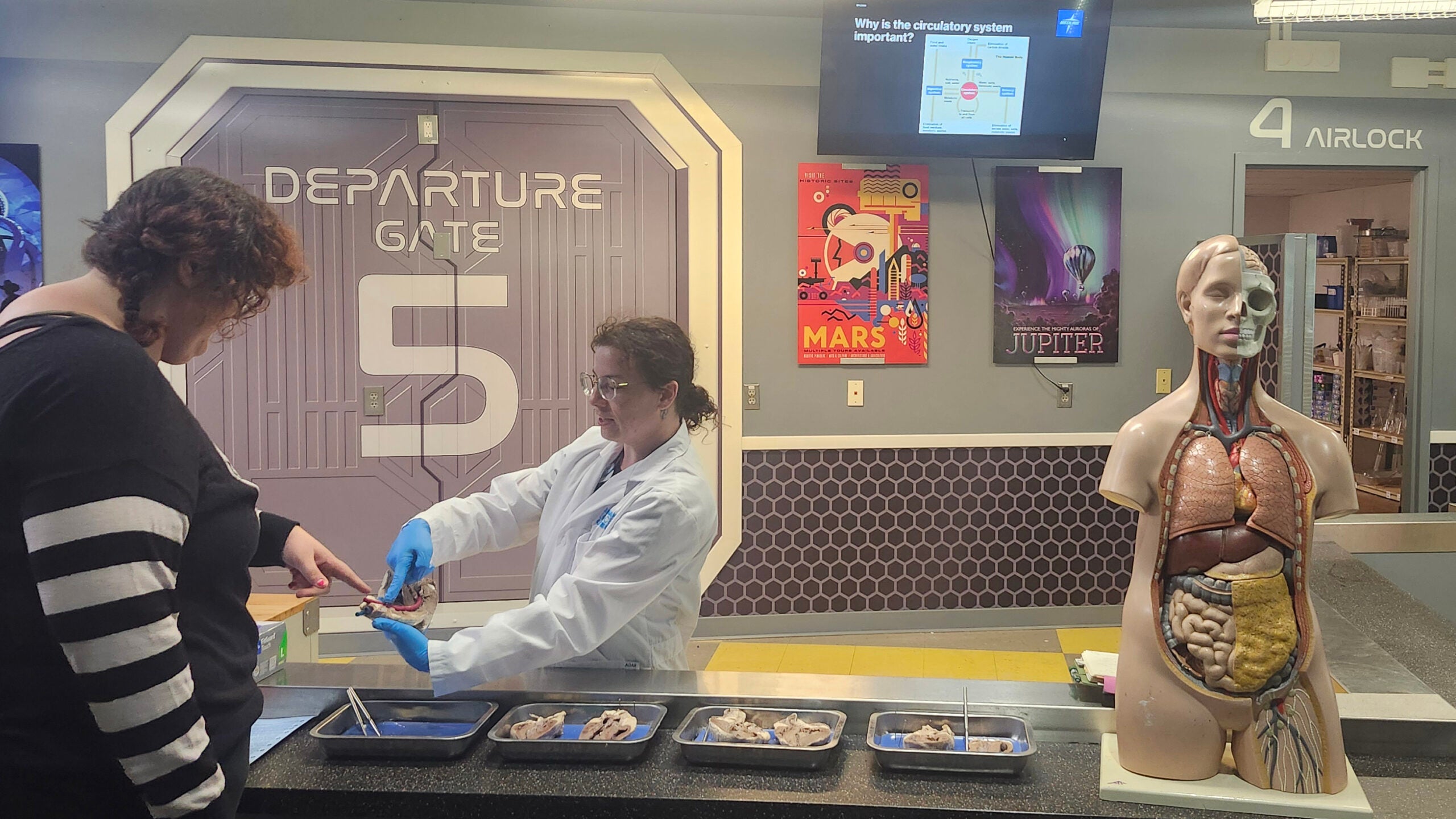
Using gloves and other supplies provided by Medline, Miriam DeWolf (right) shows Michigan Science Center co-worker Steph Bedore a bisected sheep’s heart at the museum's “Insides Out” exhibit.
North of downtown Detroit in the city’s culture-rich Midtown neighborhood, the Michigan Science Center has more than 220 interactive exhibits for young people and their families to explore as they expand their understanding of space, physical science, engineering and anatomy.
The newest one is a chance to get some cardio in.
Introduced in August and resuming this weekend with enhancements after the center’s annual maintenance refresh is “Insides Out,” a live examination of animal organs — specifically the hearts of sheep — to be held from 2 to 4 p.m. Saturdays and Sundays in the “Learning Launchpad” area on the main museum floor.
Medline, which operates two facilities in the greater Detroit area, is the exclusive sponsor of the program, summarized for visitors as a “dissection series.”
Domenic Roberto, the museum’s manager of guest experience, describes “Insides Out” as less of a show and more of a self-paced learning station. Guests can come and go at their leisure to look inside a pre-bisected sheep’s heart with a museum staff member, studying the chambers and valves to learn how blood is pumped, where it goes and why that’s important. The more adventurous learners are invited to gently touch the heart.
InsidesOut-Heart-Combo
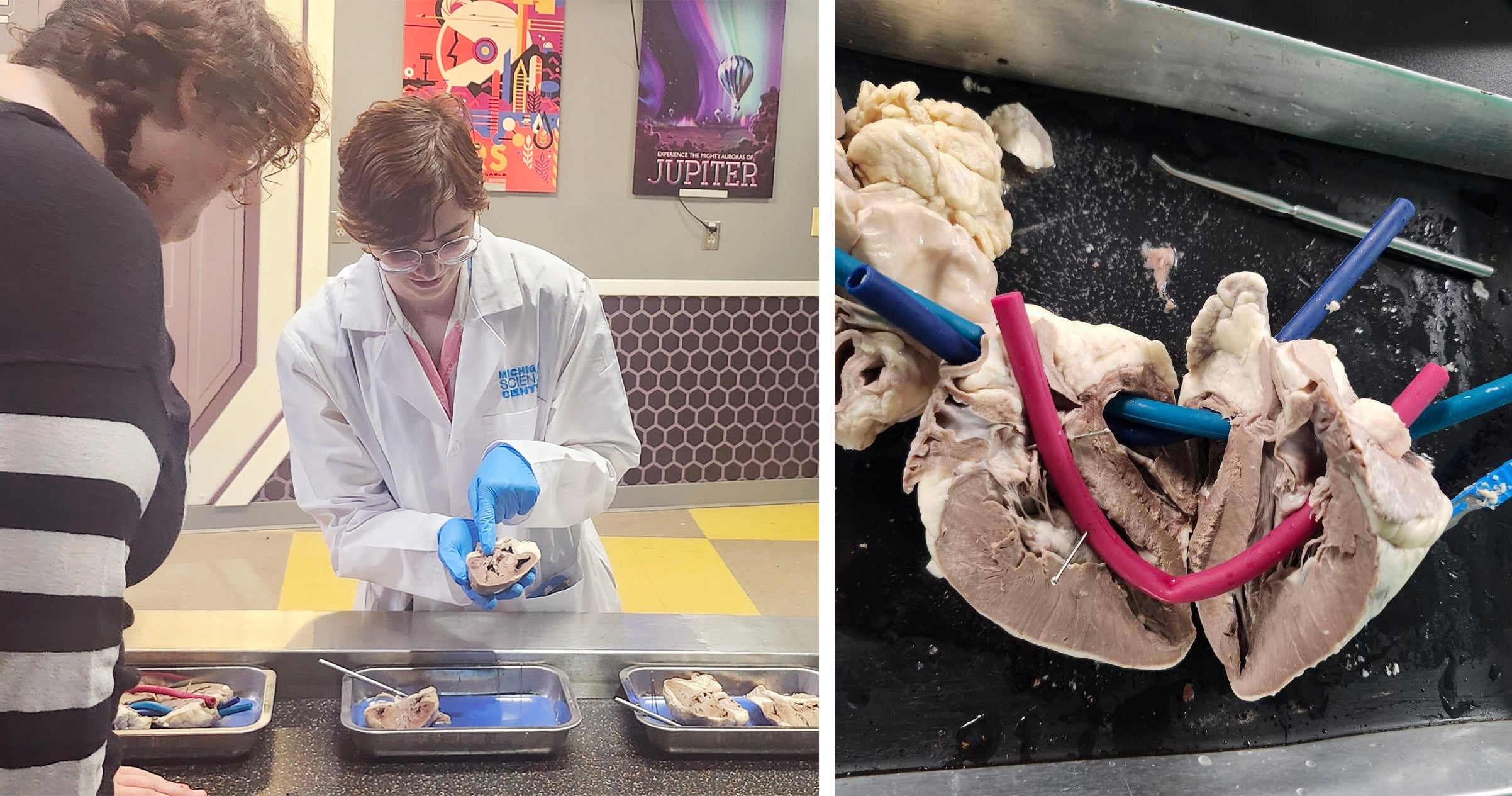
Staff member Cam Bruder walks through the chambers of a sheep’s heart, which isn’t terribly different from a human’s. The silicon tubes (right) represent the flow of blood — red for oxygenated blood and blue for deoxygenated.
There’s also a full “pluck model” with the preserved internal organs of a sheep in all the correct places, to illustrate where the heart sits and the body’s pathways for oxygenated and deoxygenated blood. A human heart model shows kids how their hearts differ slightly from a sheep’s. Mason jars with liquid are rigged with balloon membranes and straws, allowing kids to push down on the membranes to simulate the squeezing pressure that drives blood flow. Red blood cells can be seen up close under a microscope.
“Everything in the body’s related, but the heart has so much to talk about in and of itself that folks are able to really see it,” Roberto said. “It’s a much more in-depth and hands-on look than you get just looking at a PowerPoint slide.”
The sheeps’ hearts themselves come from Carolina Biological Supply Company, based in Burlington, N.C. The supplies used to handle and study them — probes, forceps, dissection trays and large quantities of gloves — are provided by Medline, whose name and logo also appear on signs and monitors. That’s similar to the setup for other museum attractions Medline has sponsored since last year: a cow-eyeball dissection show at Chicago’s Griffin Museum of Science and Industry and interactive lab and medical activities at the Perot Museum of Nature and Science in Dallas.
A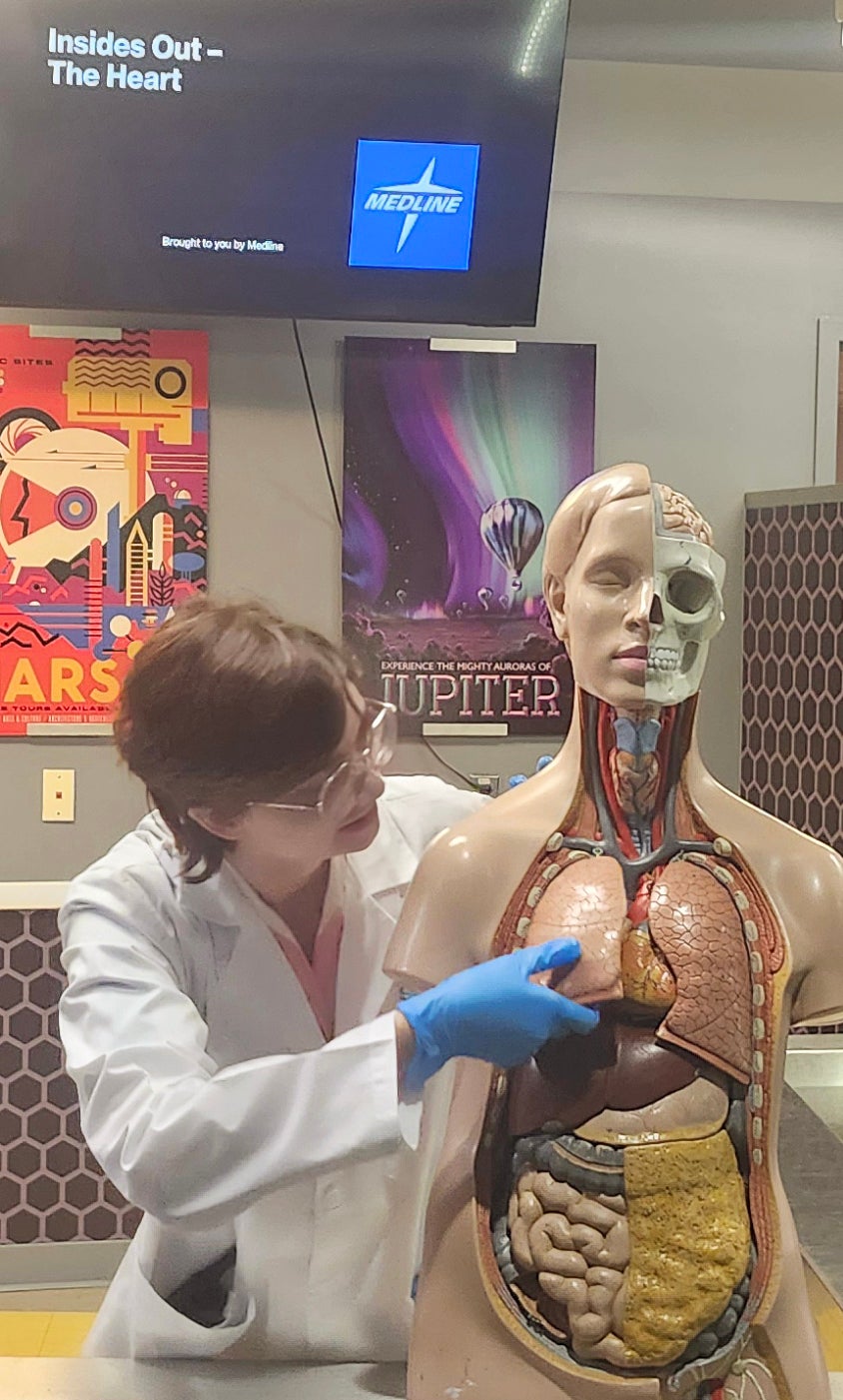 s was the case with those sponsorships, it was Medline that initiated the relationship with the Smithsonian-affiliated Michigan Science Center, seeking to tie its important role in the healthcare supply chain into a new learning experience that connects back to human anatomy. Since eyeballs were already a focus in Chicago, the museum went with hearts for Detroit.
“A lot of people are mystified by organs and how they work,” Roberto said. “In actuality, the heart is really just a piston, pumping blood using pressure and squeezing. When you see the mechanisms with your own eyes, it really puts things in perspective both how simple and how complicated it is.”
Roberto sees “Insides Out” potentially covering not just other heart topics (blood pressure, cardiac health) but also other organs such as the kidneys.
All of it serves a larger educational purpose — giving kids a friendly taste of the biological science they’ll encounter later.
“Together with Medline, we’re offering an experience that’s very fun without them being overwhelmed like they might be in their initial school setting,” Roberto said. “Organs can be scary or disgusting for some kids at first. But when we come in there with this good energy — “Let’s go on a ‘tour.’ Let’s learn about this” — it really does reframe it.
“How do you go into science or biology or anatomy if you haven’t had a chance to build confidence? Starting early, we’re hoping that can carry on to their classrooms and then hopefully inspire them to keep going forward from there.”
Medline isn’t just encouraging future scientists. Learn how it’s tapping into local talent in operations and manufacturing through its recently launched Workforce Pathway Program.

Medline Newsroom Staff
Medline Newsroom Staff
Medline's newsroom staff researches and reports on the latest news and trends in healthcare.